
Who helps with back pain? An overview of the most important contacts
09/06/2026 · healthbookr-Redaktion

 AI-modified
 Back pain is one of the most common everyday complaints. It can be caused, for example, by prolonged sitting, physical strain, lack of exercise, or other factors. Many sufferers then ask themselves: Who can help with back pain?
The answer depends on the individual situation and possible causes. Depending on the symptoms, different healthcare providers may be the appropriate point of contact. This overview shows which professionals to consult for back complaints and when it may be advisable to seek medical clarification.
Common causes of back pain
Back pain can have many different triggers. These include, among others:
Sedentary lifestyle and prolonged sitting
Postural misalignments in daily life or at work
Muscle tension and physical overexertion
Weak core and back muscles
Disc-related complaints
Stress and psychological strain
Sport-related malalignments or overuse injuries
Age-related changes in the musculoskeletal system
Since back pain can have various causes, an individual assessment is crucial.
Who helps with acute back pain?
When new symptoms arise, many people initially focus on rest and recuperation. Often, supportive measures such as warmth, gentle movement, or soft mobilization exercises are used.
The appropriate measures in individual cases depend on the specific situation. In cases of persistent, severe, or unclear symptoms, a professional assessment should be conducted.
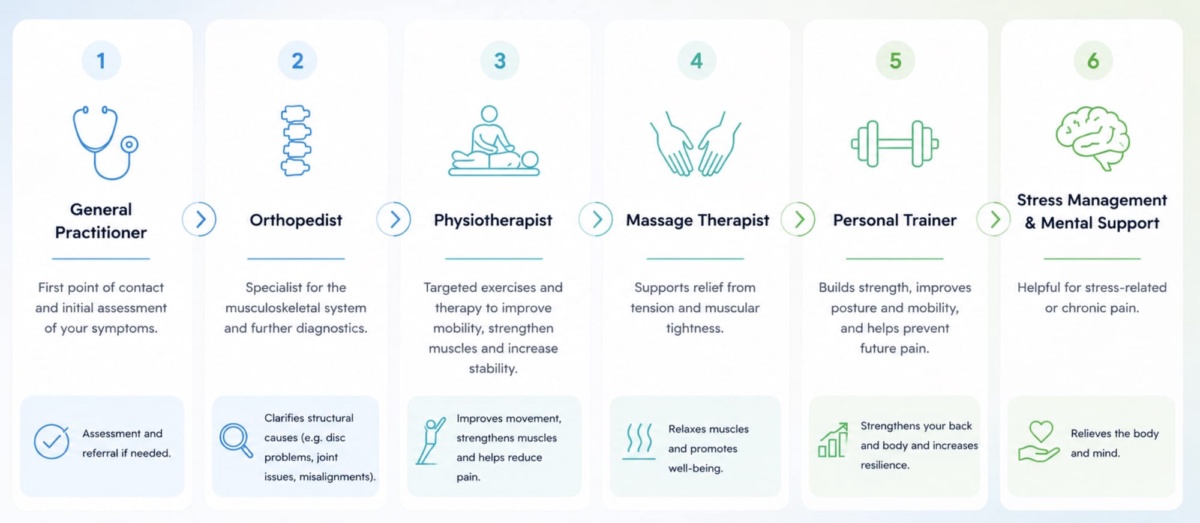
General practitioner: Often the first point of contact
The family doctor is the first point of contact for many people experiencing back pain, particularly when:
Symptoms persist for several days
The pain is getting worse.
The cause is unclear.
A medical assessment is requested.
The general practitioner can assess the symptoms and, if necessary, refer the patient to other specialists or facilities.
Orthopedist: Specialist in the musculoskeletal system
Orthopedists deal with diseases and complaints of the musculoskeletal system. An orthopedic evaluation may be considered, for example, in cases of:
recurrent back pain
Suspected structural causes
Symptoms radiating to the arms or legs
long-standing back problems
Further investigations will be assessed on an individual basis.
Physiotherapy for back pain
Physiotherapy is frequently used for back complaints. Depending on the situation, different measures may be employed, for example:
Movement and mobilization exercises
Posture training
Exercises for muscle stabilization
Manual techniques
Support in developing health-promoting exercise habits
The appropriate content depends on the individual situation and the treatment goals.
Can massages help with back pain?
Many people use massages for muscular tension or stress-related complaints. They are often used as a complementary measure alongside other treatments.
Whether and to what extent massages are suitable should be assessed individually.
Alternative and complementary therapies
Some people are additionally interested in supplementary offerings such as acupuncture, naturopathic methods, or other holistic approaches.
Medical evaluation before using such services may be advisable, particularly in cases of unclear or persistent symptoms.
Personal Trainer: Long-term prevention of back problems
Personal trainers can support individuals in building strength, flexibility, and health-oriented exercise habits.
Individualized training can be a meaningful addition, especially after completing therapy or when seeking to incorporate more movement into daily life.
Consider stress and psychological strain
Physical symptoms can be influenced by stress, tension, or sleep problems. That's why some people also incorporate stress management, relaxation, or psychological support services into their health strategy.
The appropriateness of measures should be assessed on an individual basis.
When should back pain be medically evaluated?
For certain symptoms, prompt medical advice should be sought. These include, for example:
suddenly very severe pain
Numbness or tingling
Paralysis symptoms
Complaints following an accident or fall
Bladder or bowel dysfunction
Fever associated with back pain
Unexplained weight loss
significantly increasing symptoms
This list is not exhaustive and does not replace a medical evaluation.
Who is the appropriate contact person?
Depending on the situation, different healthcare providers may be appropriate:
Initial orientation: General practitioner
Musculoskeletal complaints: Orthopedist
Movement, Mobility, and Posture: Physiotherapy
Muscular tension: Massage therapist
Training and Prevention: Personal Trainer
Stress-related burdens: Corresponding counseling or support services
Conclusion
Back pain can have many causes. Therefore, there is not one single correct point of contact for all those affected. Depending on the symptoms and individual situation, general practitioners, orthopedists, physiotherapists, massage therapists, personal trainers, or other healthcare providers may be appropriate.
Those who take their complaints seriously and seek appropriate support early on can often gain orientation more quickly and find suitable next steps.
Important notice:The contents of this article are for general information purposes only and do not constitute medical advice, diagnosis, or treatment. If you have any health concerns, you should consult a physician or another qualified healthcare professional.
Find the right providers
Compare doctors, therapists and coaches near you and request an appointment with ease.